
 828-712-7945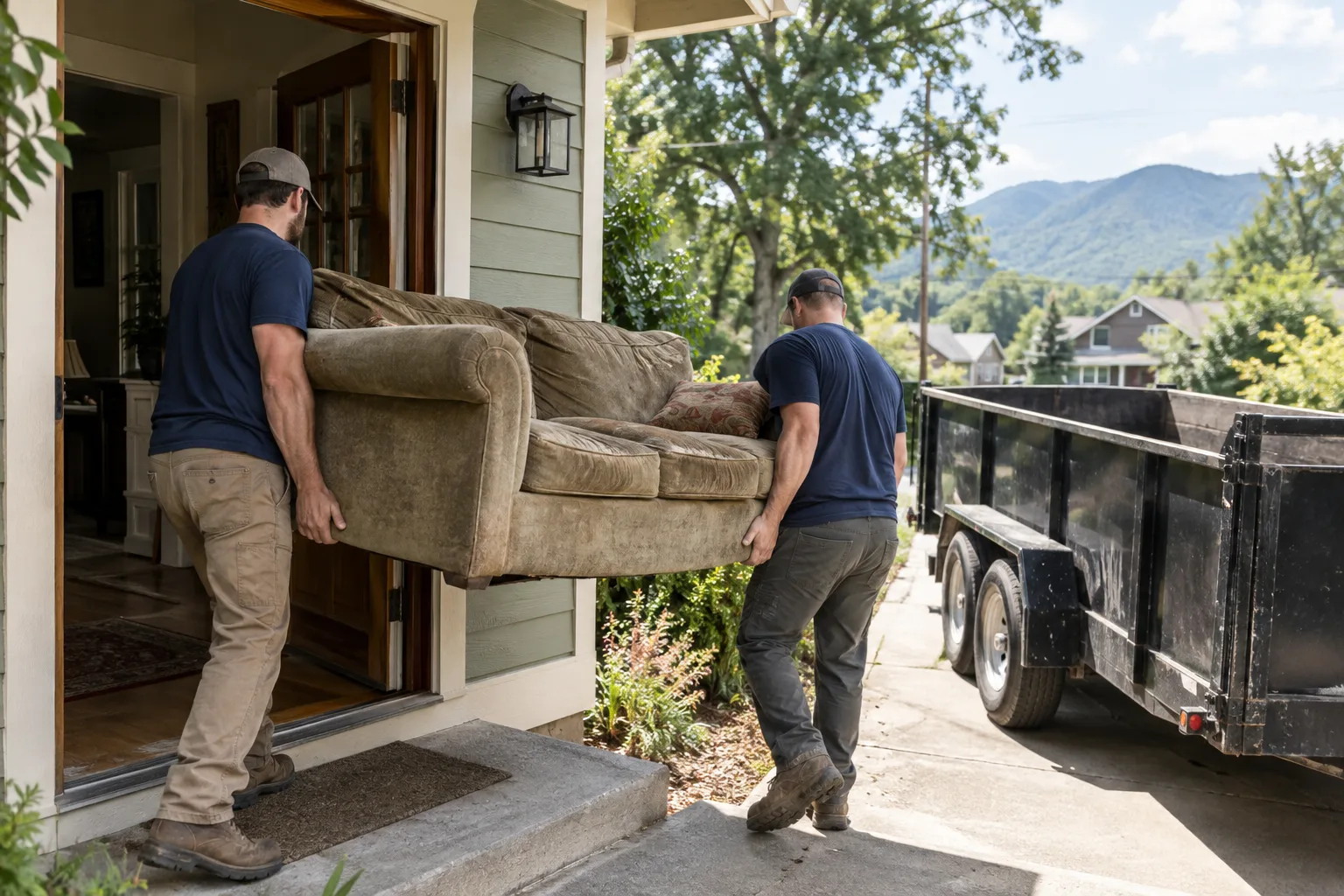
A residential junk removal estimate changes with five things: load volume, material and weight, carrying access, labor beyond basic loading, and the disposal route. Photos help, but an on-site look is more reliable because a flat image rarely shows depth, weight, stairs, or the complete pile.
The five factors behind the number
1. Load volume
Many jobs start with how much truck or trailer space the items occupy. A loose room full of chairs and boxes can use more space than expected. Compact dense material can look small and still create a different handling and disposal problem.
2. Material and weight
A mattress, a bookcase, wet yard debris, broken concrete, and household boxes do not behave the same way. Weight affects lifting, loading, vehicle limits, and disposal. Tell the crew about dense material instead of burying it beneath lighter items.
3. Access
One sofa beside a driveway is a different job from the same sofa in a third-floor walk-up. Stairs, switchback paths, narrow doors, elevators, parking restrictions, steep grades, and long carries can add time and people.
4. Extra labor
Sorting, bagging loose material, dismantling a structure, removing doors, or separating a mixed pile is more work than carrying ready-to-move items. Do not assume demolition, cleaning, or utility disconnection is included. Ask.
5. Disposal route
Some material can be donated or recycled. Other items need a specific facility, fee, or handling method. Hazardous material follows separate public guidance and should not appear unexpectedly in a household load.
How to describe the load without guessing truck fractions
You do not need to estimate “half a truck.” Give the crew information it can use:
- Count the large pieces: two sofas, one mattress, three shelving units.
- Estimate boxes by common size and whether they are full.
- Measure unusual items at their widest, tallest, and deepest points.
- Photograph each wall or zone, then take one wide image that shows the whole room.
- Show the route from the item to the likely truck location.
- Name dense or special material, including masonry, soil, wet debris, appliances, and electronics.
For a scattered cleanout, group the description by room. “Garage shelves, attic boxes, and two basement appliances” is more useful than “a lot of stuff.”
Questions to ask before approving an estimate
| Ask | Listen for |
|---|---|
| What is included in this written estimate? | Loading, hauling, ordinary cleanup, disposal, and any item-specific or labor charges. |
| What would change the amount? | Added items, hidden material, access that differs from the description, or work outside the agreed scope. |
| Which items cannot go? | A clear restricted-material list and a safer alternative route. |
| Does the crew enter the home? | Whether inside carrying is included and how floors, walls, stairs, and tight turns are handled. |
| When do I approve the final scope? | A chance to walk the full load and review the written estimate before loading. |
Do not compare two estimates unless the item list and access notes are the same. A low number for curbside boxes is not comparable to an estimate that includes stairs, heavy furniture, and mixed materials.
Ready for an on-site estimate?
Call with the complete item list and access notes. The crew will review the load and provide a written estimate before loading.
Call 828-712-7945Sources checked September 16, 2026
The estimate process and volume-based approach come from the supplied operating-company pages indexed in 2026. Restricted-material guidance was checked against the City of Asheville’s current preparation page. No prices or savings are claimed here.